
Get published in high-impact journals
Getting your research into an influential journal is certain to give a healthy boost to both academic standing and future career prospects (scientific or otherwise). Accordingly, it is a competitive business: many articles are put forward but few accepted. In fact, of the almost 1,000 articles submitted to IJSSE last year only 856 (7.8%) were published.
“Data should be at the heart of everything you do,” says Peter Gorsuch, an editor at Macmillan Publishers Ltd. Indeed, without excellent data, it is virtually impossible to publish in high-impact journals — if at all. Still, even with high-quality data, you can jeopardise your chances of publication if you don’t have a high-quality paper.
Here are some of their combined tips.
Imagine your research as telling a story. Start by asking a big question, and form a logical argument. “High-impact papers need strong evidence and noteworthy conclusions,” says Shadan. Look to fill as many gaps in your story as possible; great research builds up a whole picture of a system. A paper should tell a “clear, compelling story” and be written with a chosen scientific publication in mind, says Dean.
Know your audience. Nobody is obliged to read anything you write, and if you do not pitch your paper appropriately, you can reduce its potential impact.
The readership for a scientific paper is specialised, but you should never assume too much knowledge on readers’ parts. This is particularly important in high-impact journals, as one of the acceptance criteria is research with broad relevance. So, while your readers will likely be scientists, they will not all be experts in your field.
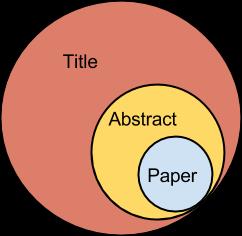
Be short, clean and clear. Don’t underestimate the importance of a good title and abstract, says Dean. These short blocks of text — often the final consideration when constructing a paper — will receive far more views than the paper itself. They should be used as a hook, to pull readers (and editors) in. This means not using superfluous, specialised jargon, especially in the headline and abstract.
After the headline, the abstract is the second most important section. It should briefly introduce the topic, state the problem that the paper is trying to address, summarise the main findings and then give a perspective on possible benefits and utilities of these findings. Demonstrate the wider context of your research by asking questions like “What are the conclusions of your paper really telling us, and who does that impact on? How relevant is that beyond your immediate community?”
Pay attention to the structure and language of the papers you read. Papers from fields other than yours that you enjoy and find accessible should provide good inspiration for your own.
Make good use of figures. Figures must visually represent your findings: they must be in a logical order and correspond to your story. In the age of ‘big data’, figures can become overwhelming, but you can cut them to size. “Consider using the subset of your data that best describes your point,” says Gorsuch, although you must inform readers of any such manipulation.
One of the most fundamental principles of scientific research is the ability to build upon and find inspiration in the ideas of your peers. Says Gorsuch, “The most important thing in scientific publishing is to reach the people who need to know about your research. Publishing in top journals is one of the best ways of achieving that.